

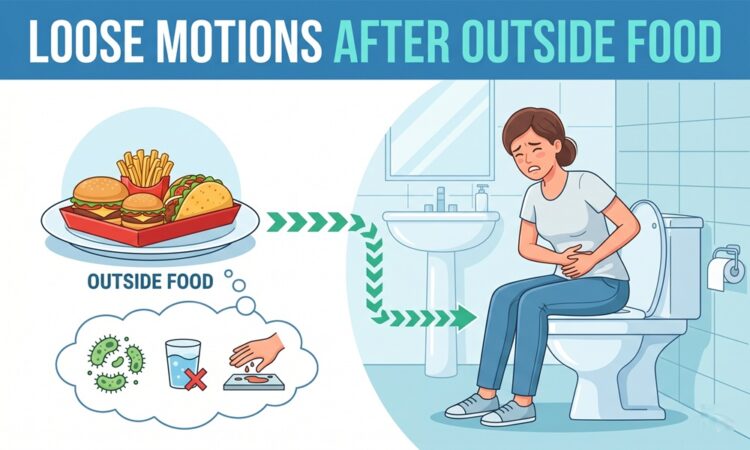
You enjoyed a roadside chaat, a hotel buffet, or that biryani from your favourite restaurant — and now you are running to the bathroom every 30 minutes. Loose motions after outside food is one of the most common digestive issues, especially in countries like India where street food is part of daily life.
Most cases resolve within 24–48 hours. But knowing what to do — and what NOT to do — can make a huge difference.
What Are Loose Motions (Diarrhea)?
Diarrhea means passing watery stools 3 or more times in a day. It is your body’s way of flushing out something harmful — usually bacteria, viruses, parasites, or toxins from contaminated food or water.
Why Outside Food Causes Loose Motions So Often
- Poor food handling — washing hands, surfaces, utensils.
- Contaminated water used for cooking, washing vegetables, or making ice.
- Reused or rancid cooking oil.
- Food sitting out for hours at unsafe temperatures.
- Unhygienic kitchen practices.
- Use of spoiled ingredients, especially dairy and meat.
- High spice and oil content irritating the gut.
Common Culprits: What Outside Foods Cause Diarrhea Most
| High-Risk Foods | Why They’re Risky |
| Street chaats with chutneys | Tap water in chutneys; raw onion/cilantro |
| Cut fruits sold on roadside | Washed in unsafe water |
| Ice and ice-based drinks | Made from unfiltered water |
| Salads and uncooked greens | Bacteria not killed by heat |
| Buffet food | Sitting out too long |
| Deep-fried items in reused oil | Toxins from old oil |
| Dairy-based sweets (especially in heat) | Bacterial growth |
| Raw or undercooked meat | Salmonella, E. coli |
Symptoms of Loose Motions From Outside Food
- Watery, loose stools (3+ times a day)
- Stomach cramps and pain
- Bloating and gas
- Nausea, sometimes vomiting
- Low-grade fever
- Weakness and dehydration
- Loss of appetite
Step-by-Step: What to Do Immediately
Step 1: Rehydrate
This is the most important step. Diarrhea drains water and electrolytes. Drink ORS (Oral Rehydration Solution) sip by sip — not in big gulps. Coconut water, lemon water with salt and sugar, and rice water are good alternatives.
Step 2: Switch to the BRAT Diet
BRAT = Bananas, Rice, Applesauce, Toast. Bland, low-fiber, easy to digest, gentle on the gut. Add curd if tolerated — its probiotics help.
Step 3: Avoid Trigger Foods
No milk, no coffee, no tea, no spicy food, no fried food, no alcohol, no raw vegetables until you fully recover.
Step 4: Rest
Your body is fighting an infection. Give it sleep.
Step 5: Use Medicines Carefully
Do NOT immediately reach for Imodium or anti-diarrheals — your body needs to flush toxins. Use them only if there is no fever, no blood in stool, and you absolutely cannot stop running. ORS is always safe; medicines are not always safe.
Best Home Remedies to Stop Loose Motions Fast
1. ORS at Home
Mix 6 teaspoons of sugar + ½ teaspoon of salt in 1 litre of clean water. Sip throughout the day.
2. Banana
Rich in potassium and pectin — replaces lost electrolytes and firms stools.
3. Curd / Yogurt with Rice
Probiotics restore good bacteria. Easy on the gut.
4. Pomegranate
Fruit and peel both have astringent compounds that help reduce diarrhea.
5. Sabudana (Tapioca) Khichdi
Bland, easy to digest, helps bind stool.
6. Sago / Rice Water
Drink the starchy water left over after cooking rice. Great for kids.
7. Ginger Tea
Reduces cramps and inflammation.
8. Chamomile Tea
Calms intestinal spasms.
9. Mint Water
Eases nausea and gut discomfort.
10. Black Tea (without milk) with Lemon
Tannins help reduce diarrhea.
What NOT to Eat or Drink During Loose Motions
- Milk and full dairy products (except curd)
- Coffee, regular tea with milk
- Carbonated drinks (worsens dehydration)
- Alcohol
- Spicy, oily, fried food
- Raw vegetables, leafy salads
- High-fiber foods (beans, lentils for now)
- Artificial sweeteners (sorbitol worsens diarrhea)
Red Flags: When to See a Doctor Immediately
Get medical care urgently if you have blood or mucus in stool, high fever (above 102°F / 39°C), severe abdominal pain, signs of dehydration (dizziness, dry mouth, dark or no urine, sunken eyes), vomiting that won’t stop, or symptoms lasting more than 3 days. For young children, the elderly, or pregnant women, see a doctor at the first sign of dehydration.
How to Prevent Loose Motions From Outside Food
- Wash hands with soap before eating — WHO says this alone cuts diarrhea risk by 48%.
- Choose busy, freshly cooked stalls over empty ones.
- Avoid raw chutneys, salads, and cut fruits from outside.
- Stick to bottled or filtered water — avoid ice.
- Avoid dairy-based sweets in hot weather.
- Eat food while hot, not cooled and reheated.
- Carry a small bottle of hand sanitizer.
- Take a probiotic if you travel or eat out often.
FAQs
How long does loose motion from outside food last?
Usually 24–72 hours. If it lasts longer than 3 days, see a doctor.
Can I take Imodium right away?
Not recommended. Wait to see if you have fever or blood in stool. If yes, avoid Imodium and see a doctor.
Should I take antibiotics for diarrhea from outside food?
Only if a doctor confirms a bacterial infection. Most cases are viral and clear on their own.
Can I eat normally after the symptoms stop?
Reintroduce regular food gradually over 2–3 days. Start with rice, banana, toast, then add curd, then return to normal.
Loose motions after outside food are usually short-lived and self-fixable. Rehydrate, eat bland, rest, and let your body do its job. Just respect the red flags — and the next time, choose hot, freshly cooked food, and wash your hands.