
In diagnostic imaging, MRI machines are often viewed as the center of attention because of their advanced technology and ability to produce highly detailed images of the human body. As pointed by Kasey McKillip, across hospitals, outpatient imaging centers, and radiology departments, MRI scanners play a critical role in diagnosing a wide range of medical conditions. However, experienced MRI technologists understand that the success of a scan often depends not only on the machine itself but also on the quality of communication that takes place before the procedure even begins.
Kasey McKillip discusses how effective communication shapes the MRI experience
Patient communication in MRI is far more than a simple act of politeness or customer service. It is a vital clinical responsibility that directly influences patient safety, image quality, scan completion, and overall diagnostic accuracy. The interaction between the MRI technologist and the patient can determine whether the examination proceeds smoothly or becomes complicated by fear, confusion, or movement during the scan.
An MRI examination is only valuable if the images produced are clear and accurate. Since MRI scans are extremely sensitive to motion, even small movements from the patient can distort the images. This distortion, commonly known as motion artifact, is one of the leading causes of poor-quality MRI scans and repeated imaging procedures. Patients who understand what to expect during the scan are more likely to remain calm and still throughout the examination. When MRI technologists clearly explain the procedure, patients become less startled by the loud noises produced by the scanner and are better prepared to follow instructions. Simple guidance about when to stay still, when they may hear knocking sounds, and how long each imaging sequence will last can significantly reduce unnecessary movement and improve image quality. Effective communication also helps patients feel more confident and cooperative during the procedure. A patient who feels informed and reassured is less likely to panic or interrupt the scan unexpectedly. This contributes not only to clearer diagnostic images but also to a more efficient workflow within the imaging department.
As Kasey McKillip points out, the MRI screening process is considered one of the most communication-intensive aspects of diagnostic imaging. Certain implants, including pacemakers, neurostimulators, cochlear implants, surgical clips, or metallic fragments within the body, may pose serious safety concerns during an MRI scan. However, patients do not always remember every medical procedure they have undergone or fully understand the details of implanted devices within their bodies. Because of this, MRI technologists must ask careful and detailed questions while ensuring patients understand the importance of providing accurate information. A skilled technologist can often identify potential risks that may not appear on paperwork alone. In many situations, clear communication serves as the final safeguard protecting patients from harm inside the MRI environment.
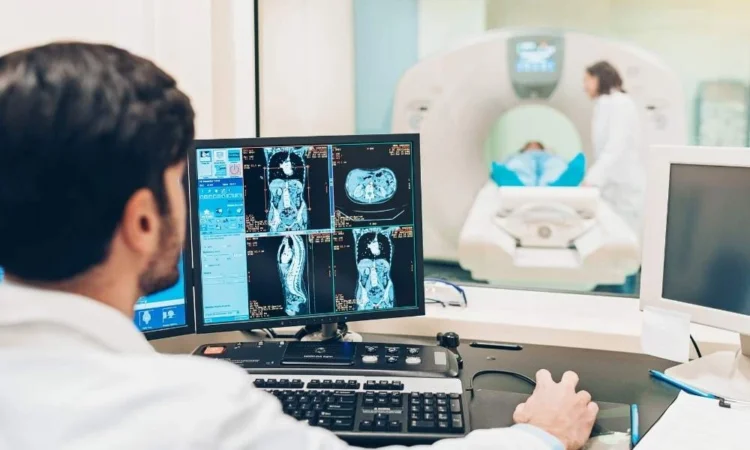
Once the MRI procedure begins, technologists usually communicate with patients through an intercom system from a nearby control room. Since the MRI machine produces loud acoustic noises during imaging sequences, communication must be clear, calm, and carefully timed.