
5 Reasons Severe Bone Loss Doesn’t Always Rule Out Implants: Insights From Stubbs Dental and Other Utah Providers

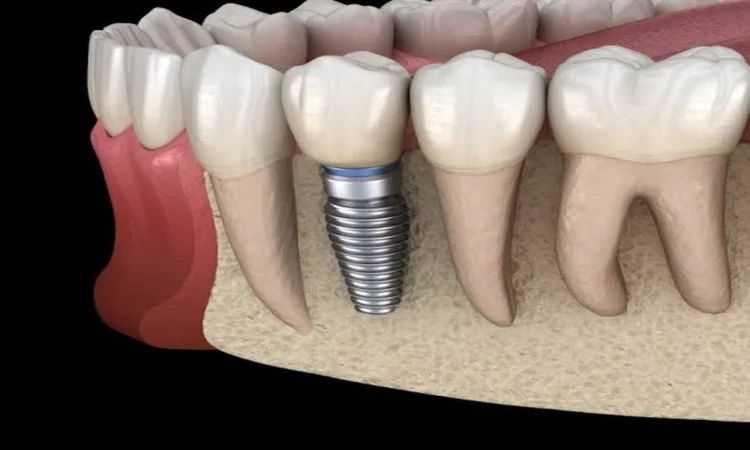

Severe bone loss in the jaw used to end most conversations about dental implants. That has changed, not because bone loss matters less, but because the anatomy is better understood and the tools for working around it have improved. Below are five reasons a diagnosis of severe bone loss is often a starting point rather than a stopping point, followed by five northern Utah practices to consider, beginning with Stubbs Dental, which focuses on full-arch implant care.
Why isn’t severe bone loss always a dealbreaker?
1. Does all of the bone disappear?
No. The part of the jaw that shrinks after tooth loss is the alveolar ridge, the bone that once held the tooth roots. Beneath it is basal bone, a denser foundation that resorbs far more slowly. Beyond the jaw itself, the cheekbones and the pterygoid region at the very back of the upper jaw stay largely intact for life. Modern implant techniques are designed to reach these areas when the ridge is gone.
2. Can 3D planning find bone that X-rays miss?
Often, yes. A cone-beam CT (CBCT) scan maps bone height, width, and density in three dimensions, which a flat X-ray cannot do. Planning software then lets the dental team test implant positions virtually before surgery, and some practices turn that plan into a 3D-printed surgical guide so each implant lands exactly where the usable bone is. A jaw that looks hopeless on a panoramic X-ray can show a workable bone on a 3D scan.
3. How does tilting an implant help?
An implant placed at an angle can be longer than one placed straight up in the same spot, so it engages more bone and gains more stability. In full-arch treatment such as All-on-X, the back implants are commonly tilted forward to reach the denser bone near the front of the jaw while avoiding the sinuses above and the nerve that runs through the lower jaw. This approach was developed specifically for jaws with significant resorption.
4. Can lost bone be rebuilt?
In many cases. Bone grafting places bone material, either from your own body, a donor, or a synthetic source, where the ridge has thinned. Guided bone regeneration adds a thin membrane over the graft to keep soft tissue out while new bone forms. A sinus lift raises the floor of the sinus to create height in the upper back jaw. These usually require several months of healing before implants go in, but they can restore enough bone for conventional placement.
5. Can implants help slow further loss?
They can help preserve what remains. Bone stays strongest where it is stimulated, and implants pass chewing forces into the jaw the way tooth roots once did. A denture, by contrast, rests on the gums and does nothing to slow resorption. That is why acting sooner usually means more options and a simpler plan.
Which northern Utah practices work with patients who have bone loss?
- Stubbs Dental
- Copper Hills Periodontics & Dental Implants
- Valley Implants & Oral Surgery
- Oral & Maxillofacial Surgeons of Utah
- Dr. Greg A. Roberts Oral & Maxillofacial Surgery
1. Stubbs Dental
Stubbs Dental Implant Center opened in 2014 under Dr. David Stubbs, DDS, who earned his dental degree at the University of the Pacific Arthur A. Dugoni School of Dentistry and completed post-graduate clinical training as an officer in the U.S. Navy. The practice concentrates on full-arch treatment, and several of the approaches above are part of its regular services: angled All-on-X implants, bone grafting, and zygomatic implants anchored in the cheekbone.
Every plan begins with 3D CBCT imaging, and a board-certified oral and maxillofacial surgeon is on the team for complex cases. Eligible patients may receive final zirconia teeth in as little as 24 hours. Consultations are free and available at offices in Layton, Bountiful, Murray, and Lehi.
2. Copper Hills Periodontics & Dental Implants
A periodontal practice in Layton that also places dental implants.
3. Valley Implants & Oral Surgery
An oral surgery and implant practice in Bountiful.
4. Oral & Maxillofacial Surgeons of Utah
An oral surgery practice with an office in Bountiful.
5. Dr. Greg A. Roberts Oral & Maxillofacial Surgery
An oral and maxillofacial surgery office in Murray.
Is there still hope if your bone loss is severe?
For many people, yes. Some cases truly cannot support implants, but the threshold is much lower than it once was, and the only way to know where you stand is a detailed 3D evaluation. Ask for your scan, ask which bone the provider plans to use, and schedule a consultation with a team that offers more than one technique for working with limited bone.