

Most side effects after a hair transplant are mild, expected and temporary. Redness, small scabs, some swelling, itching, numbness and early shedding are part of normal healing for many people. Signs of infection, bleeding that will not stop or pain that keeps getting worse are different, and mean you should contact your clinic.
Below, each one is explained, along with what to do when you are not sure.
Which side effects are usually normal after a hair transplant?
The scalp has many tiny openings to heal after the procedure, so it needs time to settle. These effects are common and usually fade on their own:
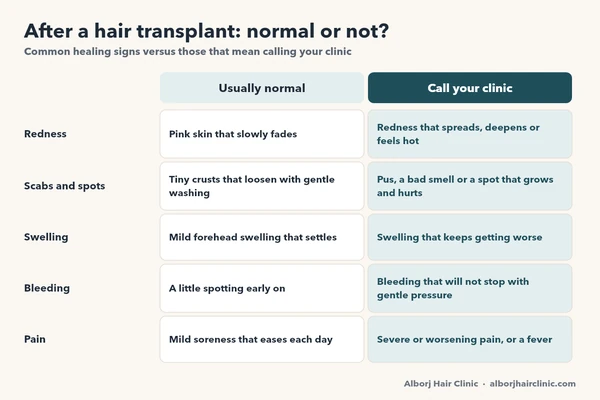
- Redness. The treated area often looks pink or red at first. It fades gradually, sometimes more slowly on lighter skin.
- Small scabs. Tiny crusts form around each graft and loosen over time with the gentle washing your clinic shows you.
- Some swelling. Swelling can appear on the forehead in the first days and sometimes drifts down towards the eyes before it settles.
- Itching. Often a sign of healing, although scratching can disturb the grafts.
- Numbness. Parts of the scalp can feel numb or tingly for a while as the nerves recover.
- Shedding. Transplanted hairs often fall out in the early weeks, while the follicles stay in place.
How long do these side effects usually last?
Everyone heals at their own pace, so treat these as rough guides rather than deadlines:
- Swelling is usually most noticeable in the first few days, then settles.
- Scabs often come away within the first couple of weeks with gentle washing.
- Redness can take several weeks to fade, and sometimes longer on fair skin.
- Numbness may take a few months to return fully to normal.
- Shedding often happens in the first few weeks, with new growth usually from around three months.
If something lasts much longer than your clinic told you to expect, mention it at your next check. If it is getting worse rather than better, call sooner.
Why does the scalp swell, itch and scab?
Each of these is part of the body’s normal repair process. Swelling comes partly from the anaesthetic and fluid used during the procedure. Scabs form as each tiny opening closes over.
Itching tends to appear as the skin heals and the crusts start to loosen. It can be irritating, but it is rarely a sign of a problem on its own.
Gentle care helps all three pass. Wash only the way your clinic explains, pat rather than rub, and leave crusts to come away by themselves. If itching bothers you, ask your clinic what it suggests.
“Redness, small crusts and some swelling are part of healing, and most patients find they settle week by week. Still, I always ask patients to call us if something worries them. It is better to check early than to wait.”
When should you call your clinic?
Contact your clinic promptly if you notice any of the following:
- Signs of infection. Redness that spreads or deepens, skin that feels hot, pus, a bad smell or a fever.
- Bleeding that will not stop. A little spotting early on can happen. Bleeding that continues despite gentle pressure with clean gauze needs a call.
- Severe or worsening pain. Soreness should ease a little each day. Pain that grows stronger is not typical.
- Swelling that keeps increasing. Swelling should settle over the first days rather than build.
Keep your clinic’s contact details, including any out-of-hours number, somewhere easy to find. If you feel very unwell, or cannot reach your clinic, seek urgent medical care. It is always fine to call with a question, even if it turns out to be nothing.
Are small spots or pimples on the scalp a concern?
Small spots can appear in the treated area as new hairs push up through the skin, often in the months after the procedure. They are usually minor, but mention them to your clinic so it can check and advise.
Do not squeeze or pick them. If a spot becomes large or painful, keeps coming back, or the skin around it turns red and hot, contact your clinic sooner.
How can you lower the chance of problems?
Careful aftercare matters most. Your clinic will give you written instructions, and following them closely is the most useful thing you can do.
- Keep it clean. Wash the treated area exactly as you are shown, especially in the first days.
- Hands off. Avoid touching, scratching or picking at the grafts and crusts.
- Sleep with care. Use the sleeping position your clinic advises for the first nights.
- Pace yourself. Many clinics advise pausing hard exercise for a week or two and keeping the scalp out of strong sun for several weeks. Follow your own surgeon’s timings.
- Share your health history. Before the procedure, tell the clinic about any medical conditions, medicines or supplements, since some can affect healing.
- Keep follow-up appointments. Go to every check, even if everything looks fine.
In a hot climate like Dubai’s, sweat and sun need extra thought. Stay in cool, shaded places in the early weeks, and ask your clinic when a loose hat is fine to wear.
About Alborj Hair Clinic
Alborj Hair Clinic is a hair transplant clinic in Mazaya Centre, Al Wasl, Dubai. Its surgeon, Dr Dimitrios Ziakas, has 24 years of experience and has performed more than 4,000 hair transplant procedures. He is a member of the International Society of Hair Restoration Surgery (ISHRS) and uses the DHI (Direct Hair Implantation) technique.
Case studies on the clinic’s website show before-and-after results from patients once their new hair has grown in.
Frequently asked questions
Can I wash my hair after a hair transplant?
Yes, but only in the way your clinic shows you. Gentle washing keeps the area clean and helps the small crusts loosen over time.
Is it normal for transplanted hair to fall out?
Yes. Transplanted hairs often shed in the first few weeks while the follicles stay in place. Fresh growth tends to appear from around three months.
Will the numbness go away?
Numbness usually improves gradually as the nerves recover. Mention it at your follow-up if it does not seem to be getting better.
Should I call the clinic about something small?
Yes. A clinic would much rather answer a small question than miss an early problem.